
Short-term or long-term?
For land and buildings, the line is 24 months. Sell within 24 months of buying and the profit is a short-term capital gain, added to your income and taxed at your slab rate. Hold longer than 24 months and it is a long-term capital gain (LTCG), taxed at a flat rate.
Tax rates and the indexation choice
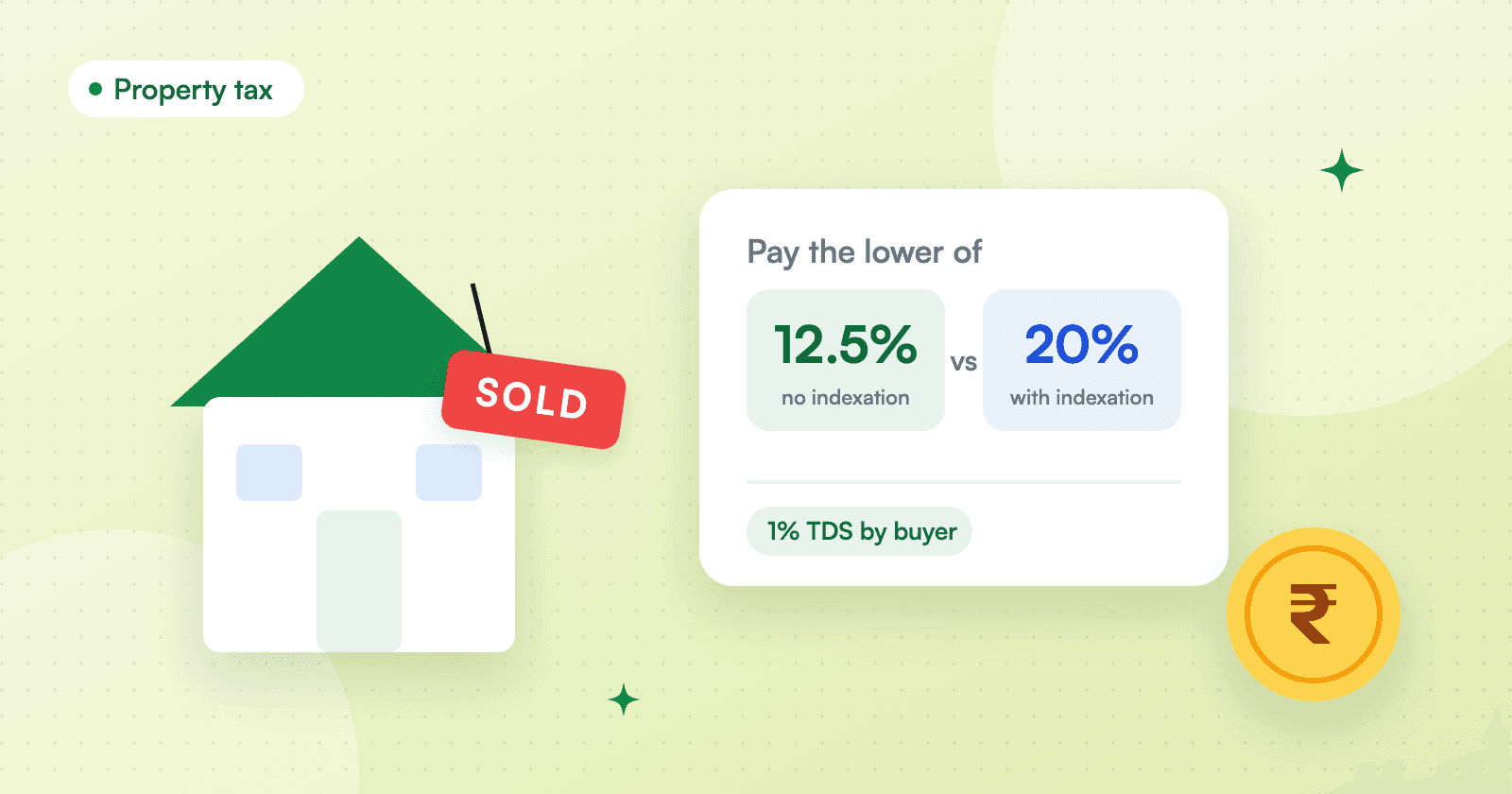
For transfers on or after 23 July 2024, LTCG on property is taxed at 12.5% without indexation. There is one important option: if you are a resident individual or HUF and bought the property before 23 July 2024, you can work out the tax both ways and pay the lower of:
- 12.5% on the gain without indexation, or
- 20% on the gain after indexing the purchase cost with the Cost Inflation Index (CII).
Health and education cess of 4% applies on top, plus surcharge at higher income levels.
Two worked examples
Both sales below happened in FY 2025-26 (CII 376), before cess.
| Plot in Pal Road | Flat in Shastri Nagar | |
|---|---|---|
| Bought | 2012-13 for ₹20 lakh (CII 200) | 2018-19 for ₹50 lakh (CII 280) |
| Sold | ₹80 lakh | ₹70 lakh |
| 12.5% without indexation | Gain ₹60 lakh → ₹7,50,000 | Gain ₹20 lakh → ₹2,50,000 |
| 20% with indexation | Indexed cost ₹37.6 lakh, gain ₹42.4 lakh → ₹8,48,000 | Indexed cost ₹67.14 lakh, gain ₹2.86 lakh → ₹57,143 |
| Better option | 12.5% | 20% with indexation |
The pattern: for property bought long ago that has appreciated a lot, 12.5% usually wins. For recent purchases with modest gains, indexation usually wins. Always run both.
Selling below the DLC rate
In Rajasthan, stamp duty is charged on the DLC (District Level Committee) rate. Under section 50C, if the DLC value is more than 110% of the agreed price, the DLC value is treated as your sale price for capital gains. If you believe the DLC rate is higher than the property's fair value, you can ask for a reference to the Valuation Officer.
TDS when you buy or sell
- Resident seller: the buyer deducts 1% TDS under section 194-IA if the price or the stamp value is ₹50 lakh or more, deposits it with Form 26QB within 30 days from the end of the month, and gives the seller Form 16B.
- NRI seller: the buyer deducts tax under section 195 on the gain at the applicable rate, which is much higher. NRI sellers can apply for a lower-deduction certificate before the sale.
Buyers who forget the TDS face interest and late fees. If you buy property regularly as a business, our TDS service can handle the filings.
Ways to save tax: sections 54, 54F and 54EC
| Section | You sold | Reinvest in | Key conditions |
|---|---|---|---|
| 54 | A residential house | Another residential house in India | Buy 1 year before or 2 years after, or build within 3 years; exemption capped at ₹10 crore |
| 54F | A plot or any other long-term asset | A residential house in India | Invest the net sale proceeds; you must not own more than one other house; capped at ₹10 crore |
| 54EC | Land or building | Specified bonds (NHAI, REC, PFC, IRFC) | Within 6 months of sale; up to ₹50 lakh; 5-year lock-in |
If you haven't reinvested by the ITR due date, deposit the amount in the Capital Gains Account Scheme at a bank before the due date to keep the exemption open.
Reporting the sale
- Pay advance tax on the gain in the instalment after the sale, to avoid interest.
- Report it in Schedule CG of ITR-2 (or ITR-3 if you have business income), with purchase and sale dates, costs and any exemption claimed.
- Check that the buyer's 1% TDS shows in your Form 26AS and AIS.
For sales from 1 April 2026, these rules continue under the Income-tax Act, 2025 with new section numbers, so confirm the current references when you file.
Selling soon? Talk to us before you sign. We'll compare both tax options, check the DLC value and plan any reinvestment. See tax advisory and ITR filing.