
What happened
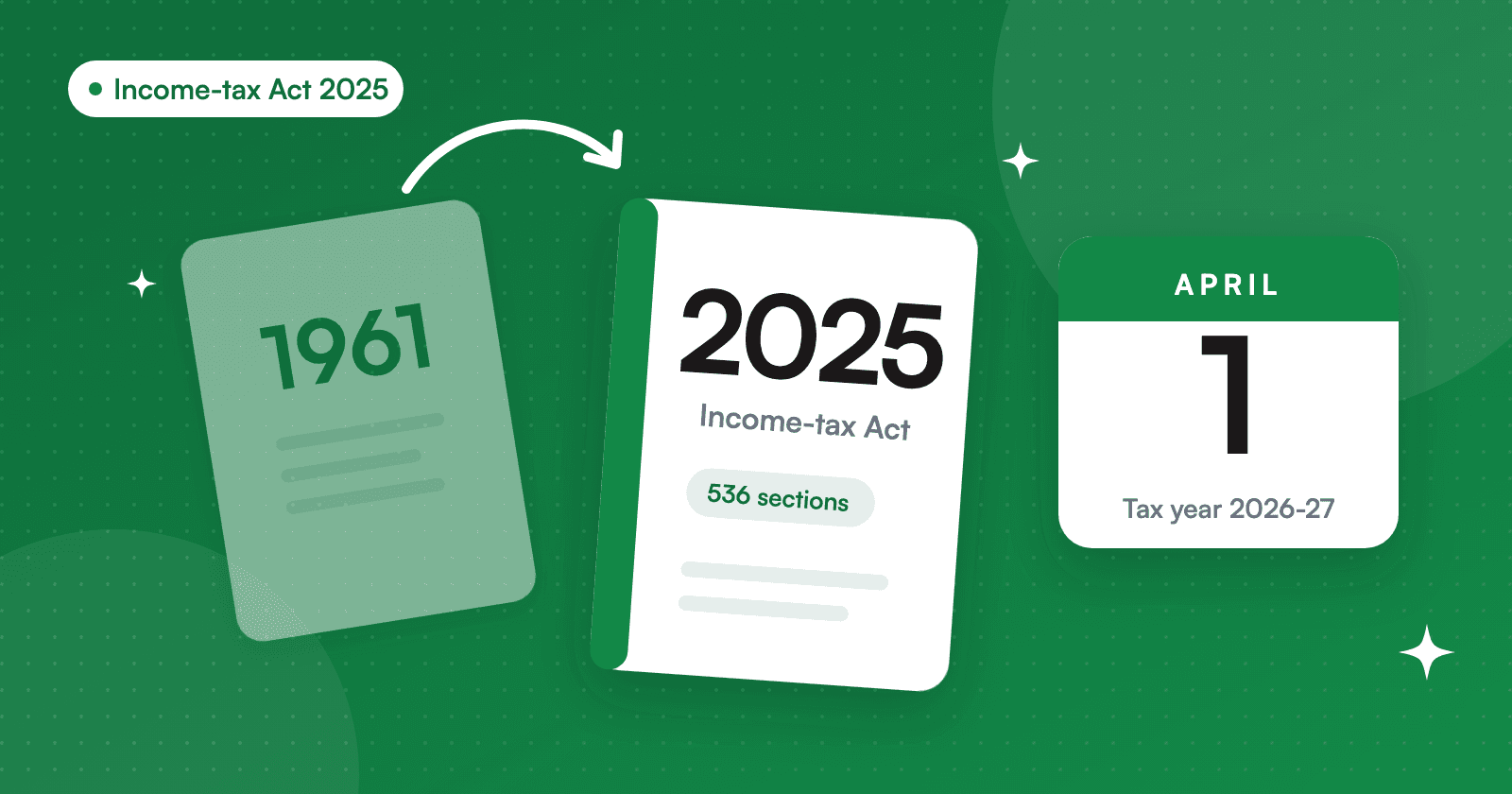
Parliament passed the Income-tax Act, 2025 in August 2025, and it took effect on 1 April 2026. It replaces the Income-tax Act, 1961, which had been amended so many times over six decades that it had become hard to read even for professionals.
The new Act has 536 sections arranged in 23 chapters and 16 schedules. Much of the detail that used to sit in long provisos now sits in tables and schedules, and obsolete provisions have been removed.
The “tax year” replaces two confusing terms
Under the 1961 Act, income earned in the previous year was taxed in the following assessment year: income from April 2025 to March 2026 was “FY 2025-26, AY 2026-27”. The new Act uses one term, the tax year, which is simply the financial year in which you earn the income.
| Income earned | Old Act terms | New Act term |
|---|---|---|
| 1 Apr 2025 – 31 Mar 2026 | FY 2025-26 / AY 2026-27 | Still under the 1961 Act |
| 1 Apr 2026 – 31 Mar 2027 | — | Tax year 2026-27 |
What stays the same
- Rates and slabs are still announced in each year's budget and enacted by the Finance Act.
- Both regimes continue: the new regime by default, the old regime with its deductions as an option.
- Deductions and exemptions such as 80C, 80D, HRA and home-loan interest carry over, under new section numbers.
- TDS, advance tax and the return process work the same way; TDS provisions are now grouped into tables.
- Faceless assessment continues, with notices and replies through the e-filing portal.
Which law applies to your return
This is the part that confuses people most. Your return for FY 2025-26, including a belated return filed by 31 December 2026, is filed under the 1961 Act. So are notices, appeals and reassessments for earlier years, which the new Act's savings clause keeps under the old law (see income tax notices explained).
The first return under the new Act will be for tax year 2026-27, filed in 2027. Form names, section references and certificates will look different then, even though the tax you pay is decided by the same kinds of rules.
What to do now
- Individuals: nothing changes for your 2026 filing. Label this year's documents “tax year 2026-27” to avoid confusion next year.
- Employers: make sure payroll software uses the new section references for salary TDS from April 2026.
- Businesses: update TDS section codes in Tally, Zoho Books or your ERP, and check vendor contracts that quote old section numbers.
- Everyone: when an adviser quotes a section number, ask which Act it is under.
Planning for the first year under the new Act is a good time for a review. Our tax advisory team can walk you through what changes for your income, and our TDS service keeps your deductions on the right sections.